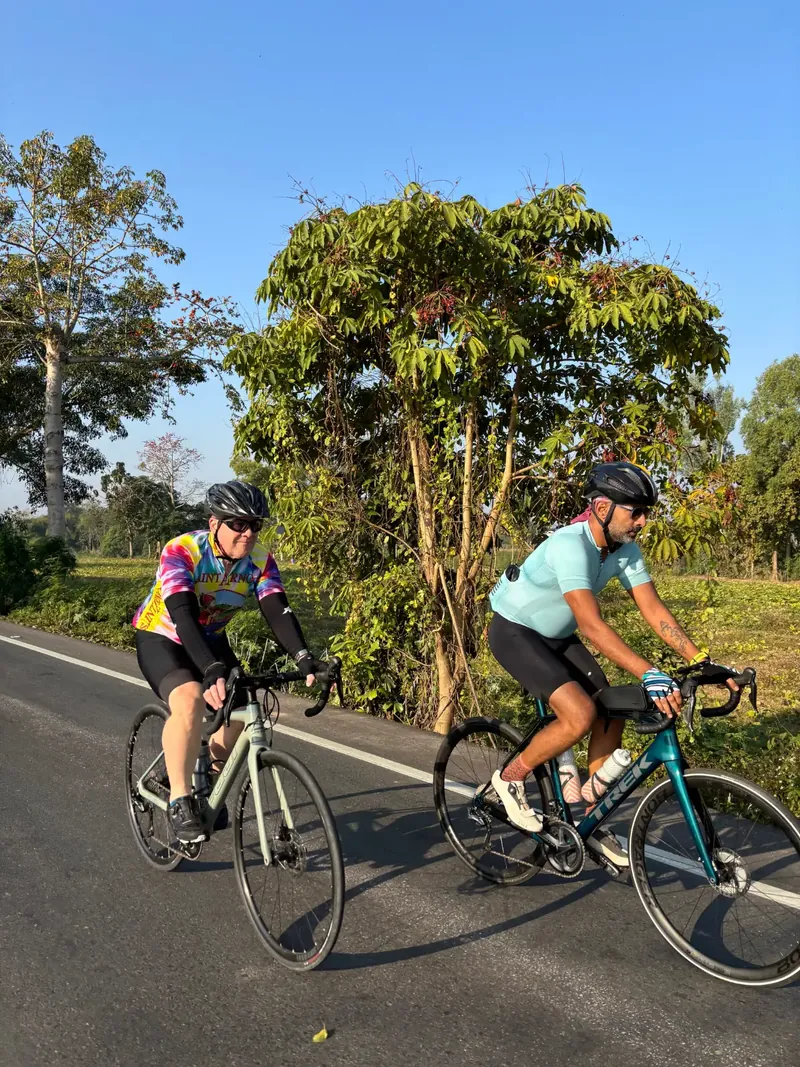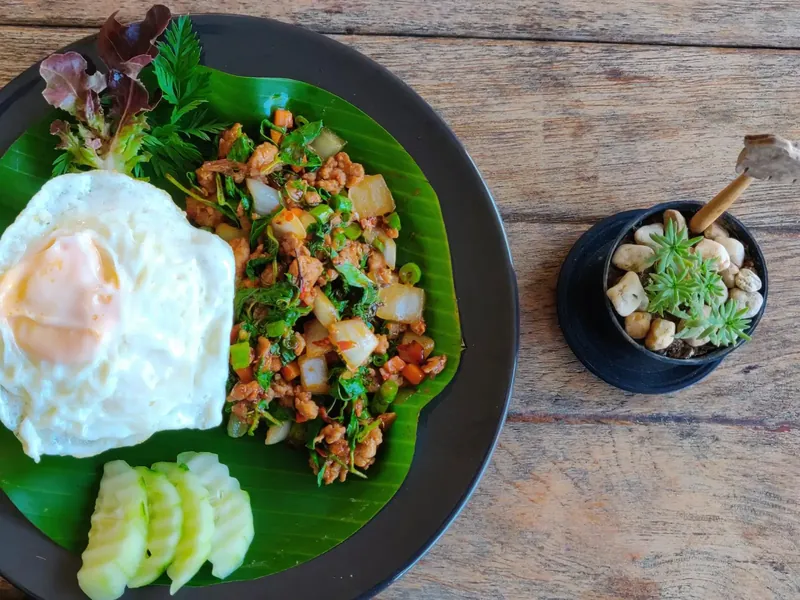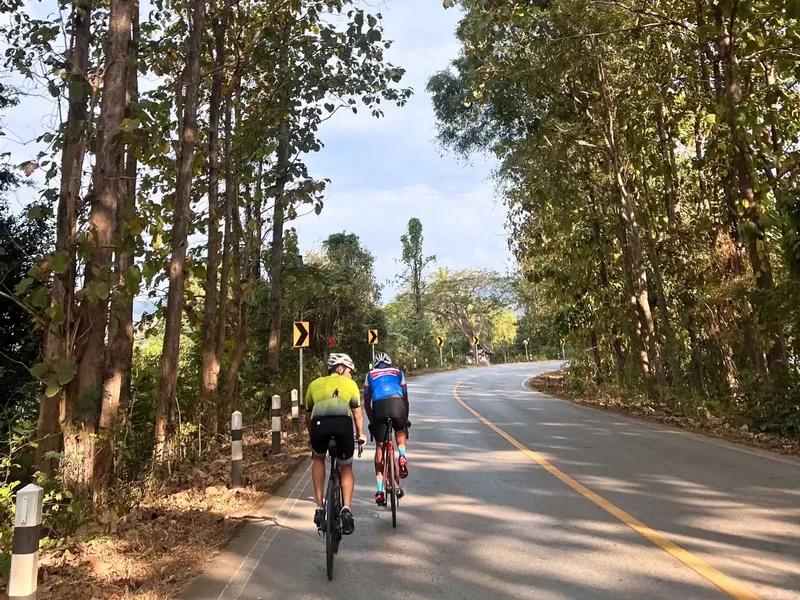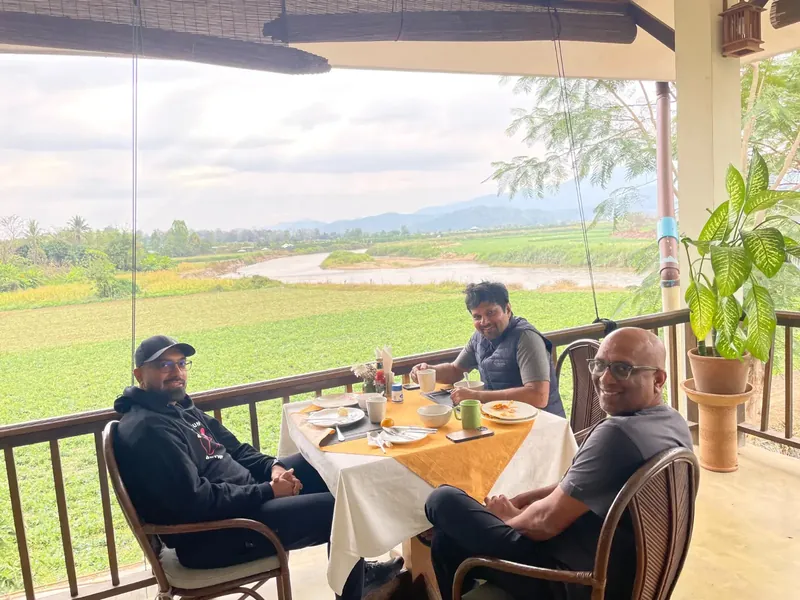
On most cycling tours, the riders who look strongest on Day 5 are not always the fittest in the group. They are usually the ones who ate properly on Days 1 to 4.
A single long ride is forgiving. You can get it wrong, feel terrible for the last hour and recover by the weekend. A tour does not give you the weekend. Every under-fuelled day is carried into the next one, and by the middle of the week it shows up as heavy legs, a heart rate that will not rise on climbs, and a mood that matches.
Why consecutive days are different
Your muscles store a limited amount of carbohydrate. A long day of riding uses much of it. If you do not replace it between rides, you start the next day partly empty, and the day after that emptier still. Training at home rarely exposes this, because most riders have a rest day or an easy day after a big one. On tour, there isn't one.
Before you ride
Eat breakfast, every day, and make it carbohydrate-based. Many riders who ride early before work are used to riding on an empty stomach. That habit does not survive a tour. Give yourself two or three hours between breakfast and the start where you can, and eat properly: rice, bread, oats, fruit, eggs, whatever the hotel offers and your stomach knows.
While you ride
Sports nutrition guidance is consistent on this:
For rides of around one to two and a half hours, aim for roughly 30 to 60 grams of carbohydrate per hour.
For longer, harder days, well-trained riders can use up to around 90 grams per hour, but only with products that mix glucose and fructose, typically in a 2:1 ratio. Above about 60 grams an hour, glucose alone cannot be absorbed fast enough.
Most tour days are long, so most riders should be aiming at the upper half of that range. In practice:
Start eating in the first hour. Not when you are hungry: by then you are already behind.
Eat a little, often. Something every 20 to 30 minutes is easier on your stomach than a large amount every couple of hours.
Read the labels. Gels and bars vary widely, from around 20 grams of carbohydrate to 50 or more. Know what you are eating.
Use the stops. On our tours the support vehicle carries fruit, snacks and electrolytes, and many days include café or village stops. Real food works as well as gels for most riders at touring pace.
Practise it at home. Your gut can be trained to tolerate more carbohydrate while riding. The long rides in your training block are where you find out what works for you, not Day 3 of the tour.
Drinking
On tours in Asia, heat and humidity raise how much you sweat, sometimes by a great deal. Drink regularly rather than in large amounts at stops, and use electrolytes on hot days rather than water alone. A simple check: if you are rarely needing to stop for the toilet and your urine is dark, you are not drinking enough.
After you ride
When you are riding again the next day, the hours straight after a ride matter most. That is when your muscles take up carbohydrate fastest.
Guidance for athletes who need to perform again within 24 hours is to take in about 1.2 grams of carbohydrate per kilogram of body weight per hour for the first few hours, or a slightly lower amount of carbohydrate with some protein. For a 70 kg rider, that is roughly 85 grams of carbohydrate an hour. In practice:
Eat within the first half hour of finishing: a drink, a banana, a sandwich, rice, whatever is to hand.
Keep eating through the afternoon rather than waiting for dinner.
Make dinner a proper meal, with carbohydrate and protein. Tired riders sometimes skip it. Don't. Check which dinners your tour includes, because on some tours several are yours to find.
Sleep is the best recovery tool you have
No supplement or massage does as much as a full night's sleep. On tour, get to bed early, keep the evening drinks moderate, and put your kit, bottles and food out for the morning before you sleep.
A note on new food
A cycling tour abroad means unfamiliar food, and most of it is wonderful. But the morning of a big day is not the time to try something adventurous for breakfast. Save the experiments for the evening, and keep a small supply of familiar bars or gels in your luggage, as our packing list suggests, in case your stomach needs a quiet day.
Signs you are under-fuelling
Your heart rate won't rise on climbs, even when you push.
Your cadence drops and stays low in the last hour, and the gears that felt fine yesterday feel too big today.
You are unusually irritable or flat in the afternoon.
You wake up hungry. Any one of these on Day 3 is a signal to eat more on Day 4: at breakfast, on the bike and afterwards.
The short version
Eat breakfast. Eat from the first hour. Aim for 60 grams of carbohydrate an hour on long days, more if your gut is trained for it. Eat within half an hour of finishing, and keep eating until dinner. Sleep.
That is most of what separates riders who finish a tour strong from riders who finish it surviving.
For how to build the fitness in the first place, see our ten-week training plan for a multi-day tour.
This is general guidance for healthy riders. If you have a medical condition, including diabetes, or specific dietary needs, speak to your doctor or a sports dietitian before changing how you fuel.
Written by Barnowl Adventures.