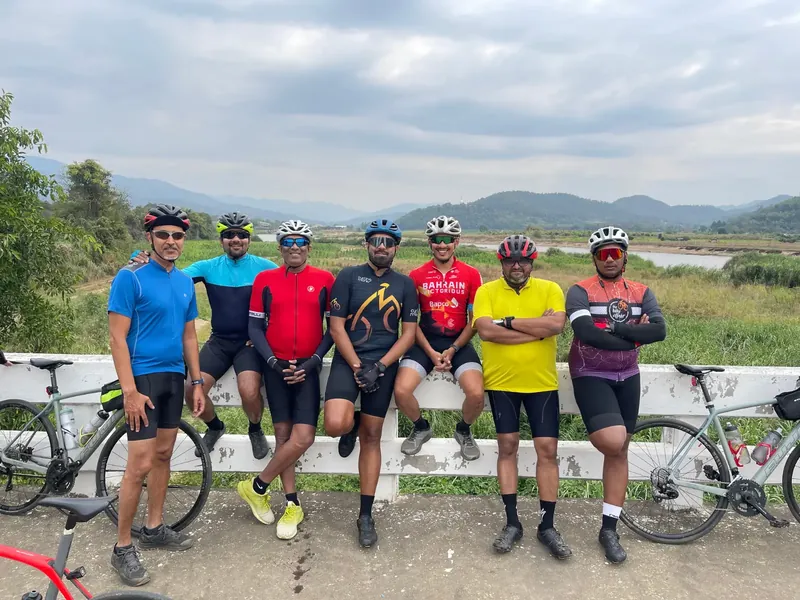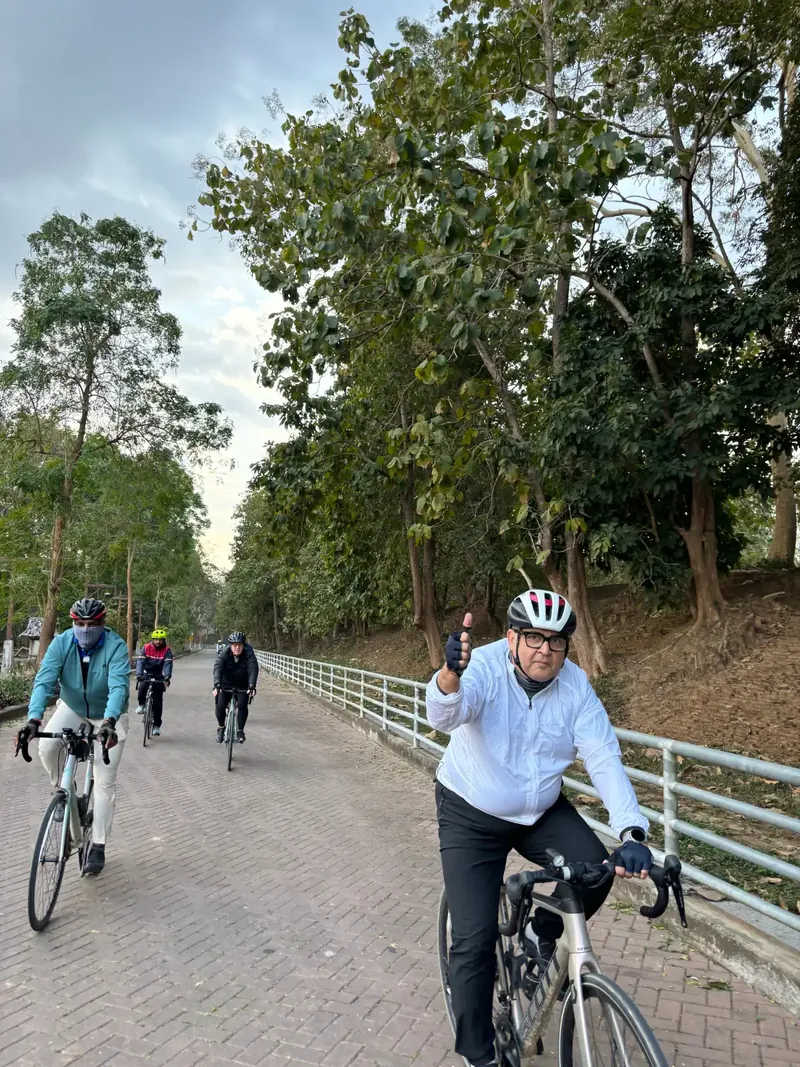
There is a bus between Chiang Rai and Chiang Mai. It takes about three hours, it runs several times a day, and almost everyone who travels between the two cities takes it or flies.
Three hours, or six days
What they pass through, without seeing it, is some of the best riding in Southeast Asia. The Mekong at the top of the country, where Thailand, Laos and Myanmar meet. River valleys running west. Hill country around Tha Ton. Then the long approach to Chiang Mai and, if you want it, the climb that finishes the whole thing.
Six riding days, 525 km, 3,225 m of climbing. Not enormous numbers. The distance averages 88 km a day, which is more than most weeks of riding but not punishing, and the climbing is moderate almost all the way until it isn't.
The corridor
Northern Thailand rewards riding in a way that is hard to explain to someone who has only seen the country from a beach or a night market.
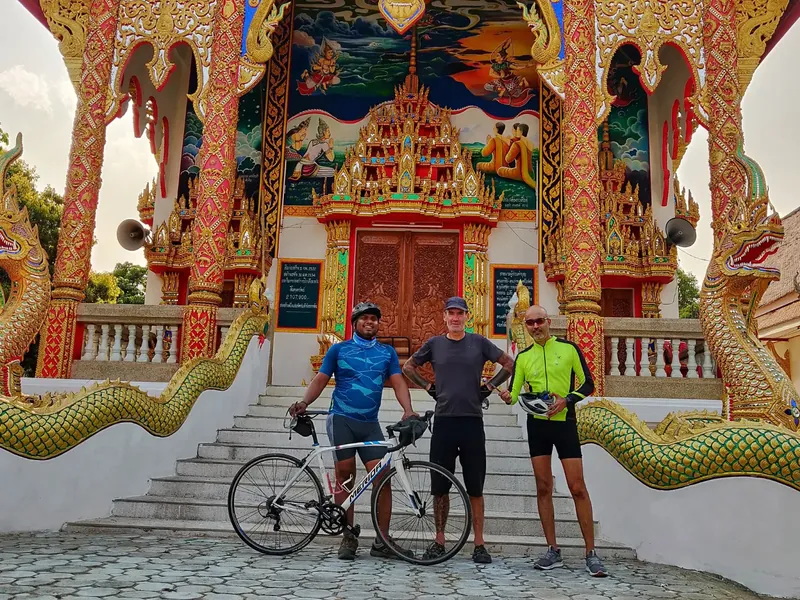
The week starts in Chiang Rai, where the White Temple has become close to synonymous with the city. It is genuinely unlike anything else on the tour.
The far north is the interesting part. The Golden Triangle sits where the Mekong divides three countries, and it carries a reputation built on the opium trade that ran through these hills for much of the twentieth century. What is there now is quieter and more ordinary than the name suggests, which is its own kind of interesting.
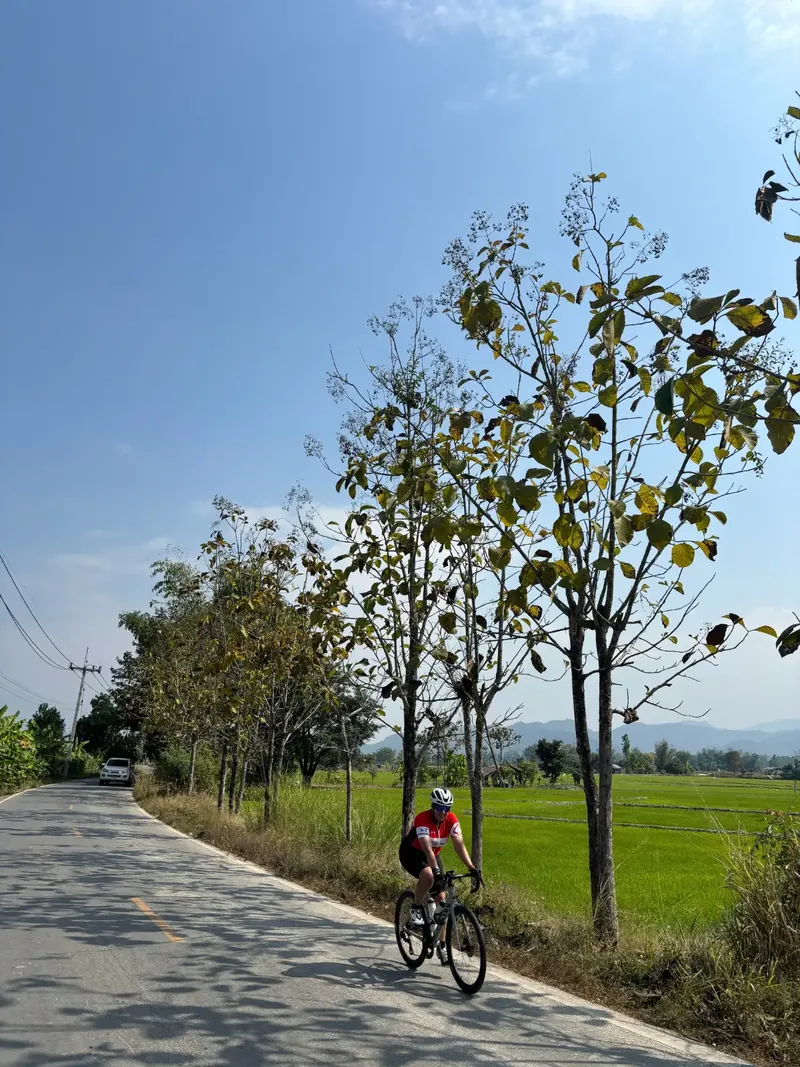
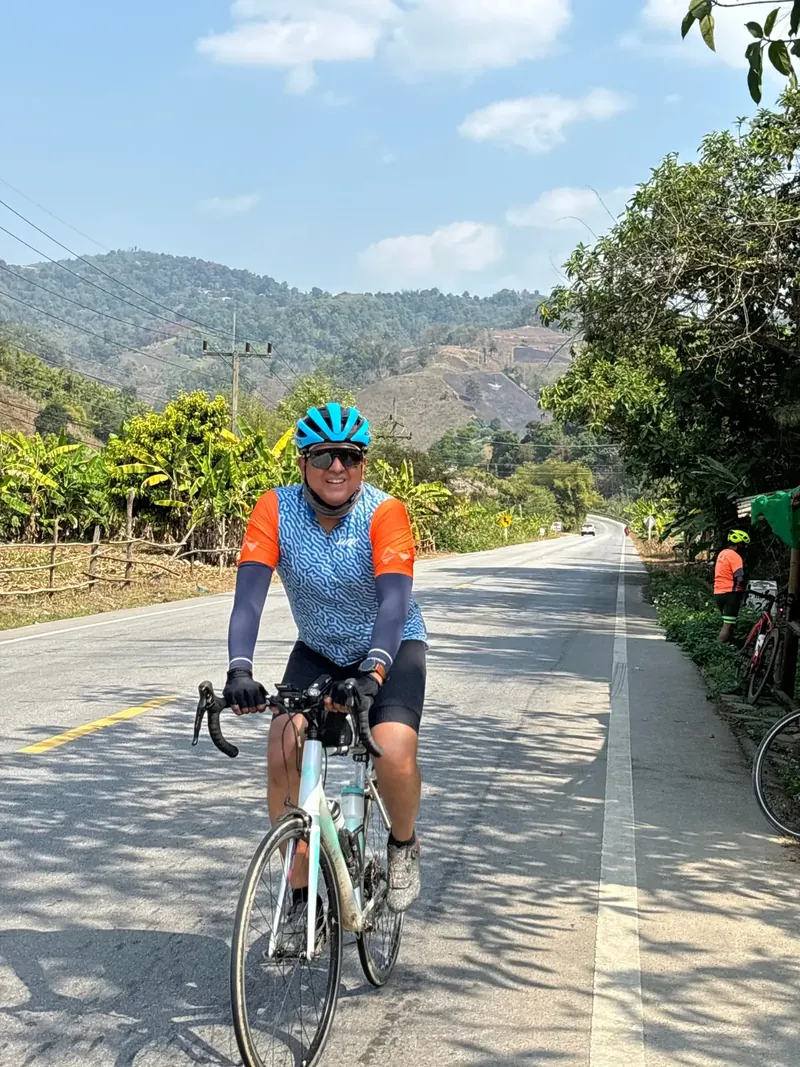
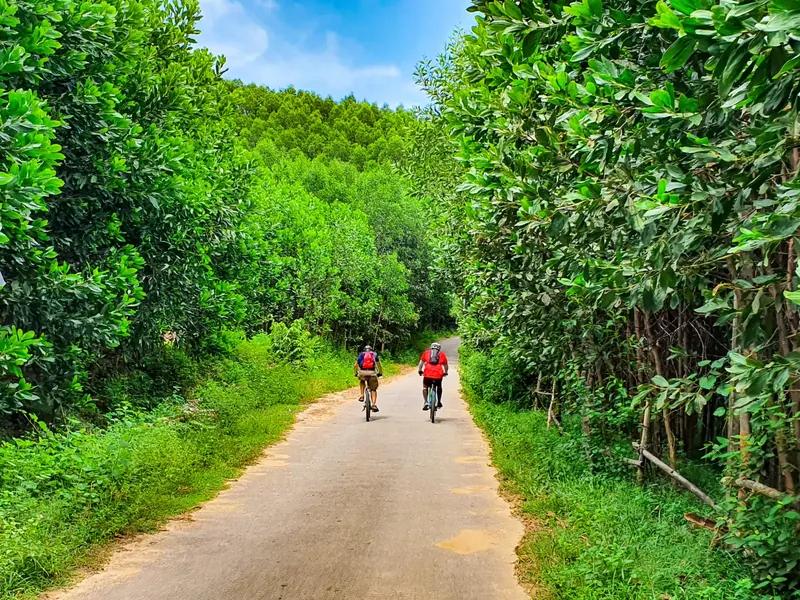
West of the river the country turns to valleys and hill roads. This is the section that makes the route, and it is largely empty of traffic, which is the reason a road bike week here works at all.
What the riding is actually like
The roads here are better than they have any right to be. Not just the main routes: the quiet backroads are in excellent condition too, which is why this works as a road bike week when so much of Southeast Asia does not.
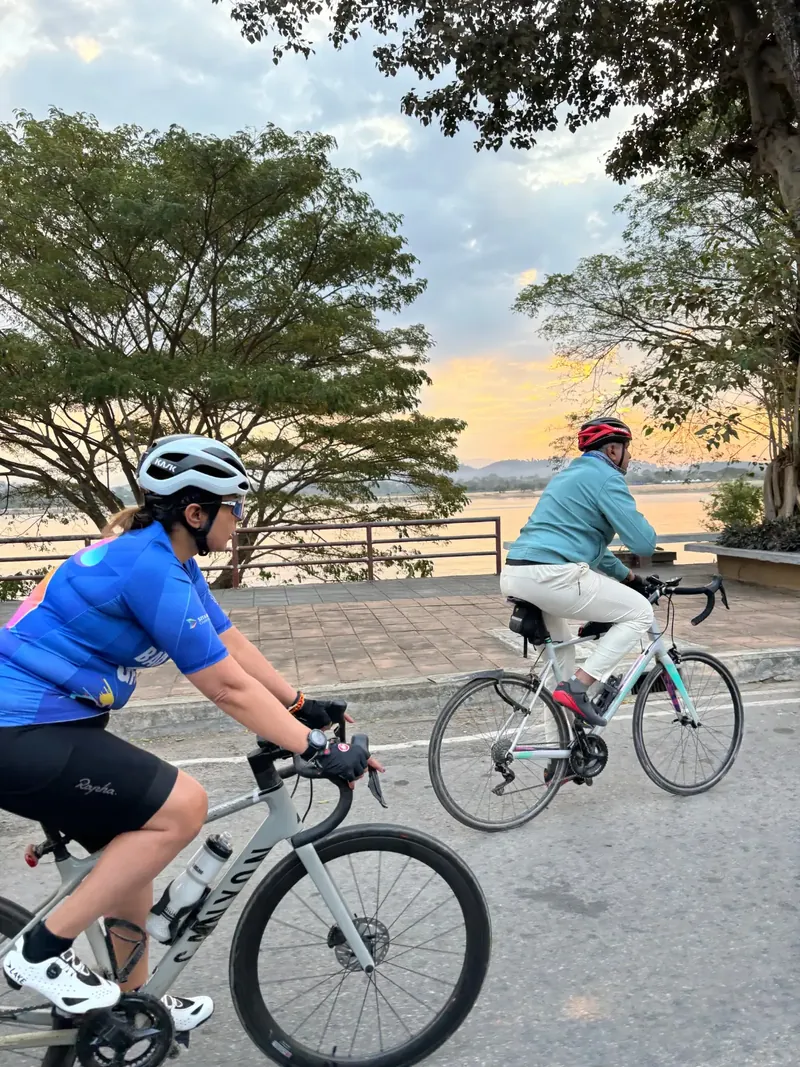
Two stretches stand out. On Day 4 the route follows a backroad along the Mekong, scenic and almost empty of traffic. The other is the first half of Day 7, from Thaton to Chiang Dao, on quiet rolling countryside roads where the riding itself is as good as the view.
There are two stretches on main highway, and neither is the penance you might expect. The first is the latter half of Day 7, which carries so little traffic that it reads as one of the best parts of the tour rather than a compromise. The second is the opening 25 km of Day 8, which is fast, safe and genuinely unavoidable. Every alternative we scouted added a great deal of distance for no gain.
Dogs, which are a real consideration on our routes in India and Sri Lanka, are not an issue here. There are far fewer of them, and the ones you meet are rarely bothered by cyclists.
The road that a monk built
The tour finishes with Doi Suthep, the mountain that stands over Chiang Mai, and the temple near its summit. The climb has a history that most riders grinding up it never hear.
Until the mid-1930s there was no proper road. Reaching Wat Phra That Doi Suthep meant walking up the mountain, a trek of several hours that only the devoted and the able attempted. A monk named Kruba Srivichai, known across the north as the engineer monk and later as the patron saint of Lanna, decided that should change. The authorities in Bangkok, with whom he had a long-running quarrel, would not fund it.
So he raised the money from his followers, ten metres of road at a time, and asked them to build it themselves. As many as four thousand people came, many of them working on the road after finishing their own day's work, cutting eleven kilometres of switchbacks up the mountain by hand with farm tools. The first hoe went into the ground on 9 November 1934, swung by Chao Kaew Nawarat, the last ruler of Lanna.
It had been estimated to take three years. It opened on 30 April 1935, a little under six months later. The first vehicle up was a 1925 Ford Model T belonging to one of his followers, a Chiang Mai trader who had also been carrying food and water to the workers.
Riders stop at the monument at the bottom of the climb without always knowing what it commemorates. It is customary for locals and travellers to leave flowers or incense there and ask for a safe journey up. Worth doing, and worth knowing why.
Doi Suthep, properly described
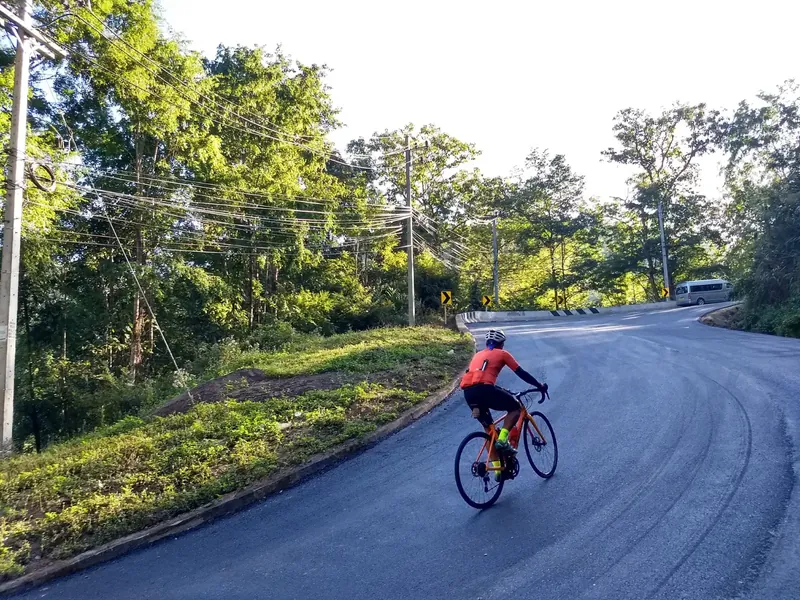
The climb is about eleven kilometres, averaging a shade under six per cent. It holds that gradient for almost all of the way, consistent enough that you can settle into a rhythm early and stay there, and there are no sudden ramps or surprises in the middle. That is the same eleven kilometres of switchbacks Kruba Srivichai\'s followers cut by hand.
The last few hundred metres are the steepest part of it, and that is where it becomes a proper effort. Get through that and you are at the temple.
There is traffic, because this is a popular temple, but timing decides whether that matters. Start early in the morning, on a day that is not a public holiday, and it is a non-issue. The final two hundred metres get busier as you approach the temple, particularly later in the day.
Steady and manageable rather than brutal. It is not the hardest climbing on the tour, which is Day 5, but it is the one you will remember, partly for what is at the top and partly for how the road got there.
What riders underestimate
The food.
Riders arrive thinking about the roads and leave talking about the khao soi. Some of the best we have found on this route came out of unremarkable hole-in-the-wall places that you would ride straight past without someone telling you to stop. Pad kra pao likewise. Years of running this route has mostly been years of working out which ones are worth the stop.
Two things that are not on the itinerary and happen anyway. There is a Barnowl tradition of a hot pot dinner beside the Mekong at Chiang Saen on Day 4, after the ride is done. And on the rest day in Fang there is an optional trip to the local hot springs, which is a better use of tired legs than almost anything else available.
What sort of week it is
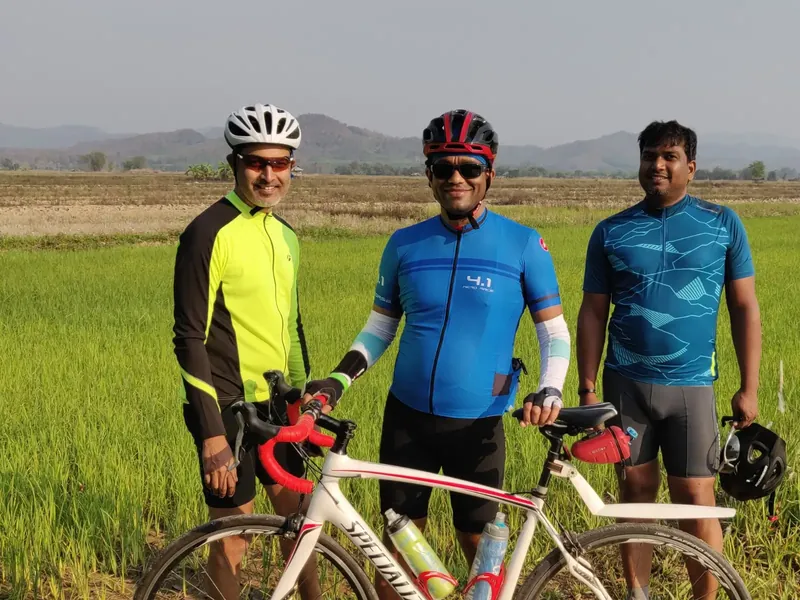
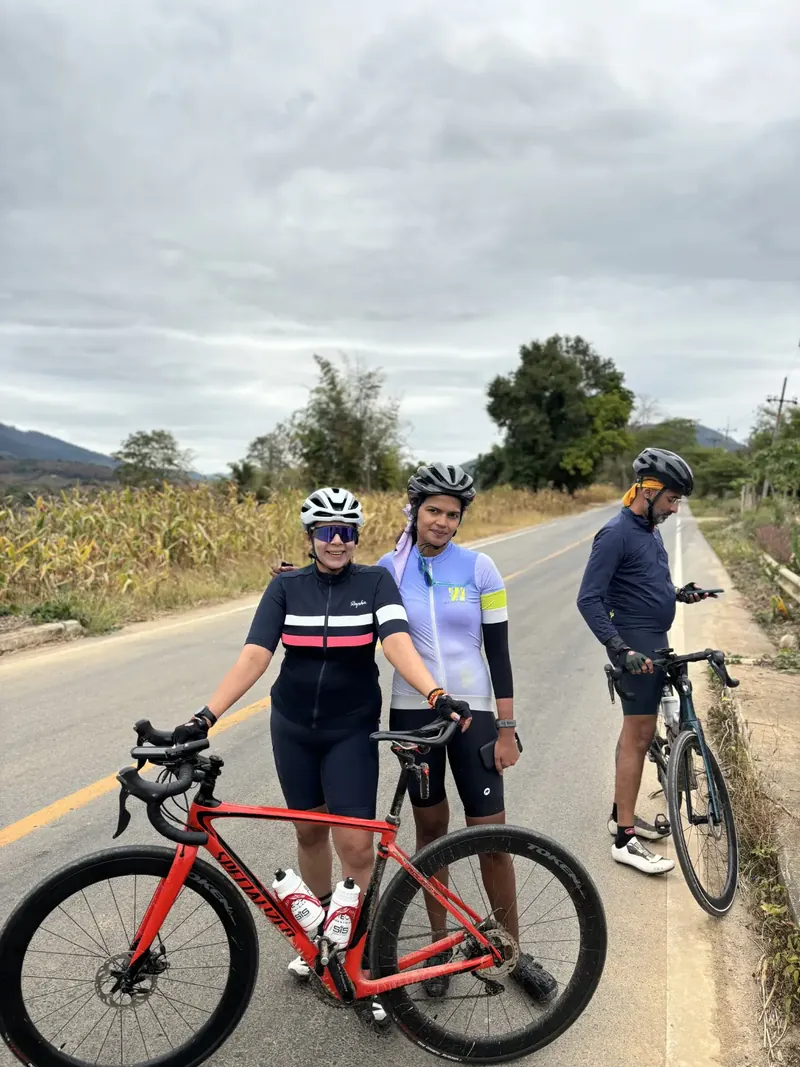
Six riding days across nine, from Chiang Rai to Chiang Mai, fully supported with a van and a mechanic. Groups of eight to fifteen.
At 88 km a day the distance is among the longest we run, and at 538 m of climbing a day this is the gentlest week on our list, lower than anything else we do. That combination makes it the most accessible of our tours for a rider stepping up to a multi-day week abroad for the first time: the days are long, the gradients rarely bite, and the support vehicle is never far away. How it compares with everything else we run is set out on the difficulty grades page.
It is not a hard tour in the way that Mae Hong Son or Vietnam's mountain days are hard. Most of it is flat or rolling, with climbs arriving in ones and twos rather than relentlessly, and the pace is unhurried enough that coffee stops are part of the plan rather than an interruption to it.
The hardest day is not the one people expect. Day 5, riding towards Thaton, has two climbs, roughly five kilometres and then three. It is also one of the most scenic days of the week, which is the trade most riders would take.
When it runs
We run this route twice each cool season, in December and in January. Full dates, pricing and the day-by-day are on the Tour of Northern Thailand page.
December or January
The two departures ride the same route, but they do not feel identical.
December runs slightly warmer, and tends to have the clearer, bluer skies. January is a little cooler, noticeably so in the mornings.
The other difference is haze. Agricultural burning can begin towards the end of December and becomes more noticeable through January, though how much and how early varies from year to year. If clear skies matter to you more than cool mornings, take the December departure.
We run this route between November and February and not outside it. A few years ago we ran a tour in the first week of March, and it was already warm enough that we were starting at dawn and aiming to finish by noon. Since then we have kept these tours to before early February, when the days are still comfortable enough to ride into the afternoon without hurrying.
The shape of a riding day
Breakfast, then rolling at about half past seven. At least one coffee stop: northern Thailand grows some of the best coffee in the country and arguably in Asia, and skipping it would be a waste. On the longer days, an unhurried lunch.
In December and January the weather is pleasant enough to keep riding through the afternoon, so there are none of the dawn starts and clock-watching that the hotter months force on you.
Food and water are never a problem. Small local cafés all along the route, and a support vehicle carrying water, electrolytes, fresh fruit and local snacks.
Riders flying from India ask the same questions each time: what the bike costs to fly, how many connections it has to survive, whether to rent instead. Bangkok is the easiest of our destinations to reach with a bike, with direct flights from several Indian cities. That, and the rest of it, is covered on our page for riders flying out of India.
If you are weighing this against our other Southeast Asia week, there is a piece on choosing between Vietnam and northern Thailand.
If the week sounds like yours, the Tour of Northern Thailand page has the full itinerary, what is included and when the next departure runs.
Written by Krish.