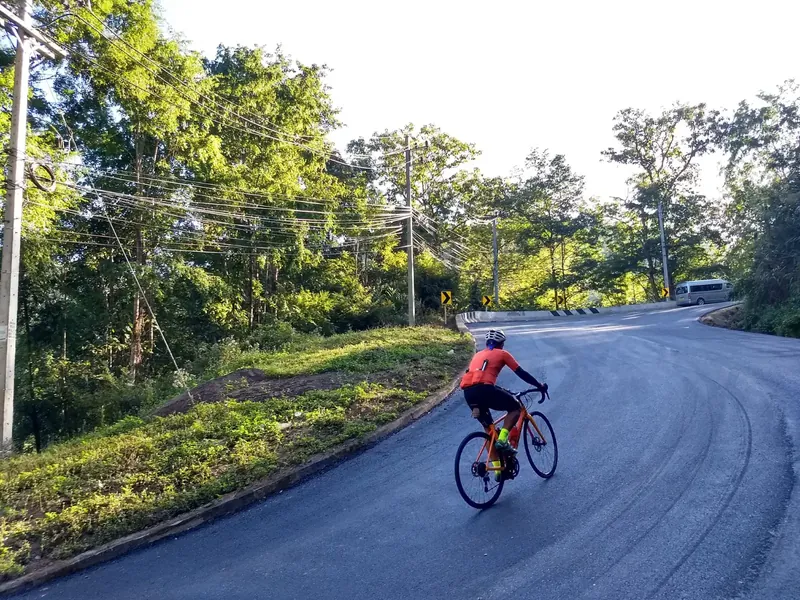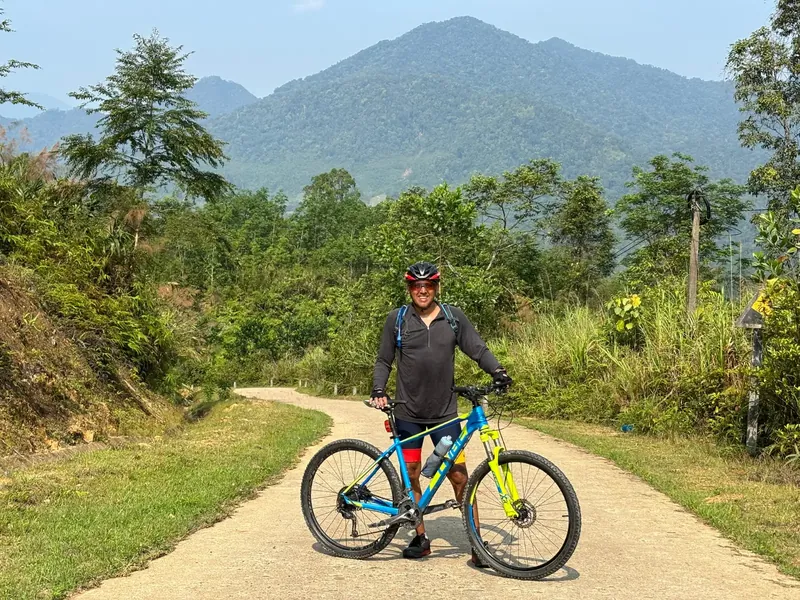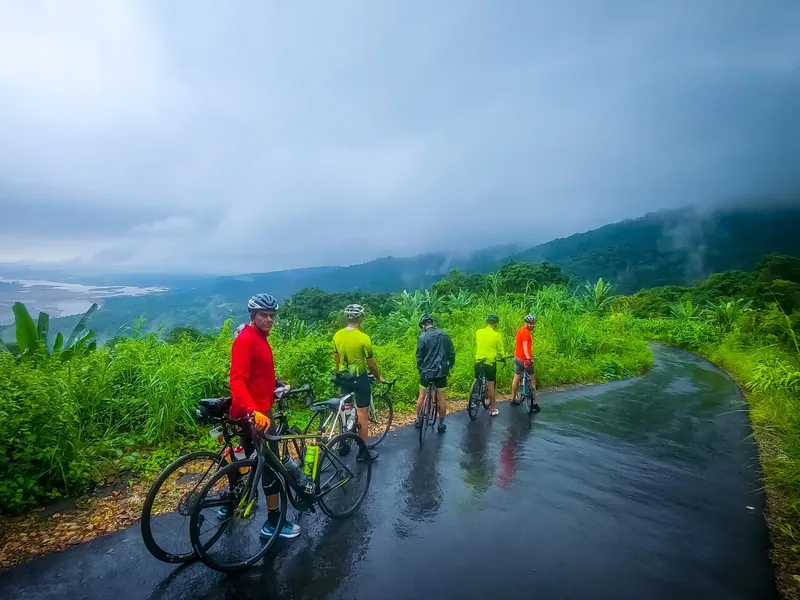
A rider can put in serious weekly kilometres around an Indian city, hold a strong pace in a group, and still arrive at the foot of an eleven-kilometre climb having never ridden one. It is the most common gap we see, and it surprises people, because by every number they track at home they are fit.
The problem is not fitness. It is the specific shape of the effort. This is how to close that gap without a mountain nearby.
What a climbing week actually asks of you
Start with the numbers you are training for, because they vary enormously. Across our own tours, average climbing per riding day runs from 538 metres on the Tour of Northern Thailand to 1,291 on our Chiang Mai training camp, 1,315 in Meghalaya, and 2,183 on the Mae Hong Son Loop. The biggest single days go past 3,000 metres.
Three things make that hard, and only one of them is obvious:
Sustained power. A climb like Doi Suthep is about eleven kilometres at a shade under six per cent. Depending on your power, that is somewhere between half an hour and an hour of continuous effort near your threshold, with no freewheeling. Riders used to flat roads rarely hold a steady effort that long: there is always a junction, a signal, or a turn that gives them a rest.
Repetition. One climb is manageable. Three climbs a day for five days, on legs that did the same yesterday, is the actual test. Most flat-land training never asks for consecutive hard days.
Torque at low cadence. On steep pitches your cadence drops, whether you want it to or not. Pushing a bigger force at 65 to 75 rpm for long periods uses your legs differently from spinning at 90 on the flat, and it is the part that tends to hurt first.
Five things that work on flat roads
1. Long steady intervals at sweet spot and threshold. This is the core of it. Intervals in the sweet-spot range, roughly 88 to 94 per cent of your FTP, build the ability to hold climbing-type power for a long time. Start around two blocks of 20 minutes and build towards three blocks of 20, or two of 30. Add threshold work, around 95 to 105 per cent of FTP, in blocks of 10 to 15 minutes. Do these on the stretch of your local route with the fewest interruptions, or into a sustained headwind, which is the closest thing a flat road has to a gradient.
2. Use the indoor trainer as a mountain. For a rider without hills, a smart trainer is not a substitute for outdoor riding, it is the best climbing tool available. It lets you hold a precise power for 40 uninterrupted minutes at the cadence you would actually climb at, with no traffic. Virtual platforms reproduce real climbs. Zwift's climb portal has included Rocacorba, the Girona climb professionals use as a form test, at 11.8 km and an average of 6.4 per cent. Riding a real climb's profile indoors teaches pacing in a way no interval session can.
3. Low-cadence strength intervals, carefully. Blocks of five to ten minutes at tempo to sweet-spot power, at 60 to 70 rpm, build the force your legs need on steep pitches. Build them gradually and stop if your knees complain: the point is strength, not injury. Balance them with work at your normal climbing cadence, because the goal on a real climb is to stay out of that grinding range as much as possible.
4. Train on consecutive days. Once a month, put two hard days back to back: a long steady ride on Saturday and another on Sunday, both with sustained efforts. It is the only way to find out how your legs respond to the second day, and the second day is where tours are won or lost.
5. Find whatever climbing exists. Flyovers, bridges and ramps are short, but repeats on them build the habit of holding power uphill. Ride them early, when traffic allows, and treat them as intervals rather than sprints. And if there are real hills within a few hours' drive, a weekend there once a month is worth more than any number of flat kilometres. Not for fitness, but for learning to pace and to descend.
The upgrade most riders skip
Before any training, look at your gearing. A bike set up for flat Indian roads often has gearing that is too tall for sustained climbing at five to fifteen per cent. A compact chainset and a cassette with a large enough bottom sprocket will do more for your first climbing week than a month of intervals, because they let you keep your cadence where your legs work best. If you are flying your own bike, sort this out before you pack it.
What you cannot train on the flat
Descending. Long, technical descents are a skill, and the only way to learn them is to ride them. On a supported tour this matters less, because you can take them at your own pace, but it is worth being honest that it is the one thing your local roads will not teach you.
How to tell if you are ready
Ride the climb indoors. Take the profile of the longest climb on the tour you are considering, hold the power you expect to ride it at, and see how it feels. Then do it again the next day. If the second day is manageable, you are closer than you think.
For how each of our tours grades on climbing, see our difficulty grades. They also give the hardest single day on each, which matters more than the average.
Training zones are based on your own FTP. If you are returning from injury or have health concerns, speak to a coach or doctor first.
Written by Barnowl Adventures.