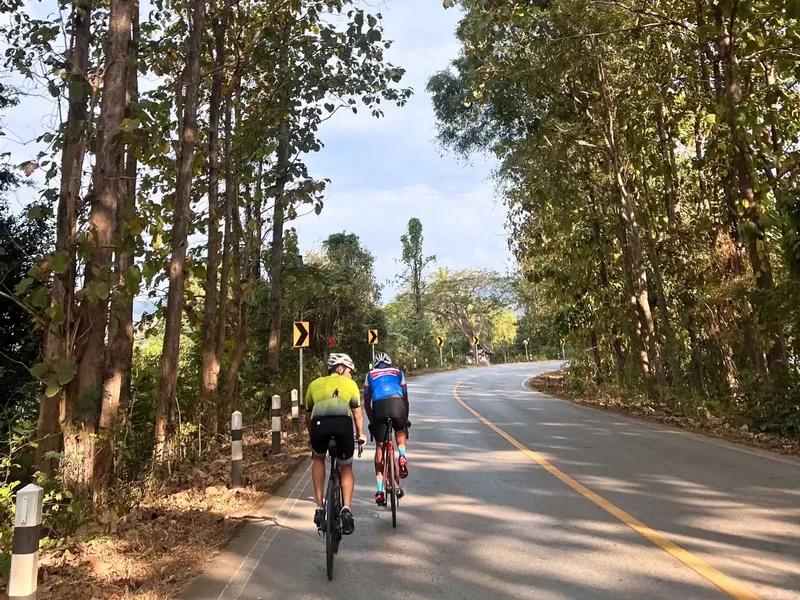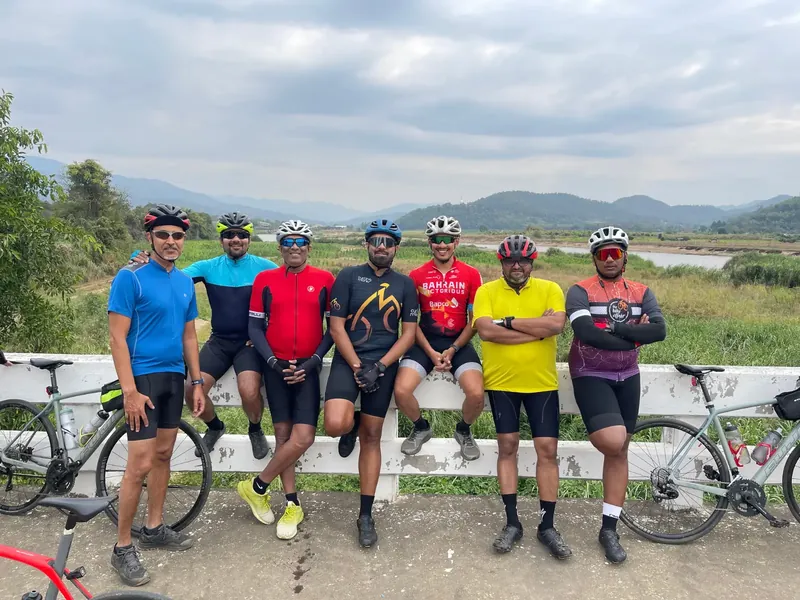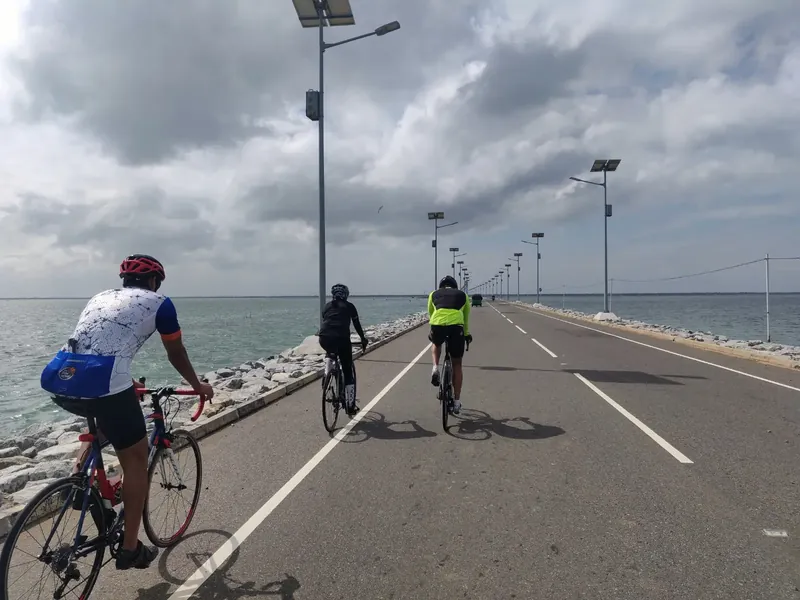
Plenty of strong riders have never ridden properly in a group. They ride alone, or with one or two friends, or in loose bunches where everyone does their own thing. That works at home. On a tour, riding with eight to fifteen people you met yesterday, on roads you have never seen, it is worth getting right.
Good group riding is mostly about being predictable. Everything below comes back to that.
The basics
Hold your line. Ride in a straight, steady line, and move gradually when you need to move. The rider behind you is reacting to you, not to the road.
Never overlap wheels. Keep your front wheel behind the rear wheel of the rider in front, not alongside it. If they swerve, an overlapped wheel is how riders go down.
Brake smoothly and early. Sudden braking in a group causes crashes behind you. Ease off the pedals, feather the brakes, and call it.
Don't half-wheel. If you are riding two abreast, ride level with the rider next to you rather than half a wheel ahead. Creeping ahead pushes the pace up for everyone.
Look ahead, not at the wheel. Watch the road two or three riders in front. You will see problems coming before the wheel in front of you reacts to them.
Calls and signals
Groups talk. The common calls are simple:
"Car back": a vehicle approaching from behind.
"Car up": a vehicle coming towards you.
"Hole", or pointing down: a pothole or hazard. Point to the side it is on.
"Slowing" and "stopping": exactly what they say.
Pass calls down the line from the front and up from the back. The rider at the front can see the road; the rider at the back can hear the traffic. Everyone in between relies on them.
Pace lines
In a single pace line, riders follow each other in one line. The rider at the front does the work into the wind for a while, then moves aside and drifts back to the end, and the next rider takes over. In a double or rotating pace line the same thing happens in two lines, with riders moving across in turn.
A few rules make pace lines work:
Don't surge when you reach the front. Keep the speed the line was already riding. A burst of enthusiasm at the front strings out the whole group behind you.
Take short turns. It is better to do thirty seconds on the front and pull off than to stay there until you blow up and leave a gap.
Close gaps gently. If a gap opens, close it smoothly rather than sprinting, and tell the rider behind if you can't.
On our Chiang Mai training camp, riding is organised around disciplined pace lines at around 27 to 28 km/h on the flat. On our supported tours, the group usually rides more loosely, at a pace that suits the day, and regroups at key stops. Either way, the same habits keep everyone safe.
Climbs and descents
On climbs, ride your own pace. Climbs split groups naturally, and that is fine. Don't try to hold a wheel that is too fast for you on a long climb; it is the quickest way to ruin the rest of the day. Good tours regroup at the top.
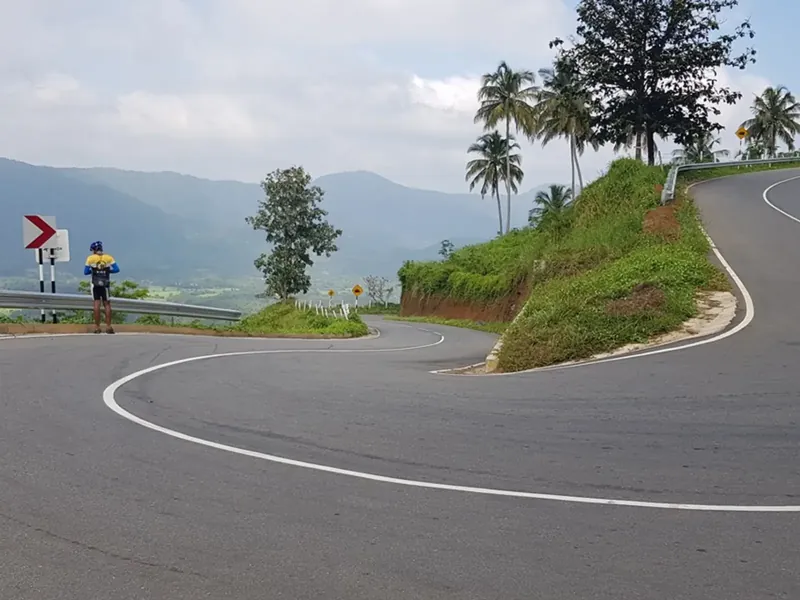
On descents, leave space. Increase the gap to the rider ahead, especially on technical descents with tight bends. Don't draft on fast descents, and don't overtake on blind corners. Ride the descent you can see, not the one you hope is there.
The thing Indian riders forget
India drives on the left. So do Thailand and Sri Lanka. Vietnam, Spain, Italy and Portugal drive on the right.
On a tour in any of the right-hand countries, everything you do instinctively is reversed. You ride on the right. Traffic overtakes you on your left. Turning across traffic means turning left. Roundabouts run the other way. And when you set off on the first morning, half-awake and without thinking, your instinct will take you to the wrong side of the road.
The first morning and the first junction after every café stop are when this goes wrong. Remind yourself before you clip in, and watch the riders around you until it feels normal.
On-tour etiquette
Be ready at the start time. A group waits for its last rider, every morning.
Tell the leader if you are stopping or turning back. A missing rider is a serious problem on a remote road, even when they are fine.
Respect the sweep. If the tour has a rider or vehicle at the back, don't drop behind it.
Eat and drink quickly at stops. Long stops cool legs down and stretch the day.
Practise before you go
If you have never ridden in a pace line, do it at home before the tour, with a club or a few experienced friends. Two or three group rides are enough to feel comfortable, and our ten-week training plan has a long ride every weekend that can be one of them. It will make your first day abroad far more enjoyable, and far safer for the riders around you.
If you are organising the group yourself, see our guide to organising a cycling trip abroad for your club.
Written by Barnowl Adventures.