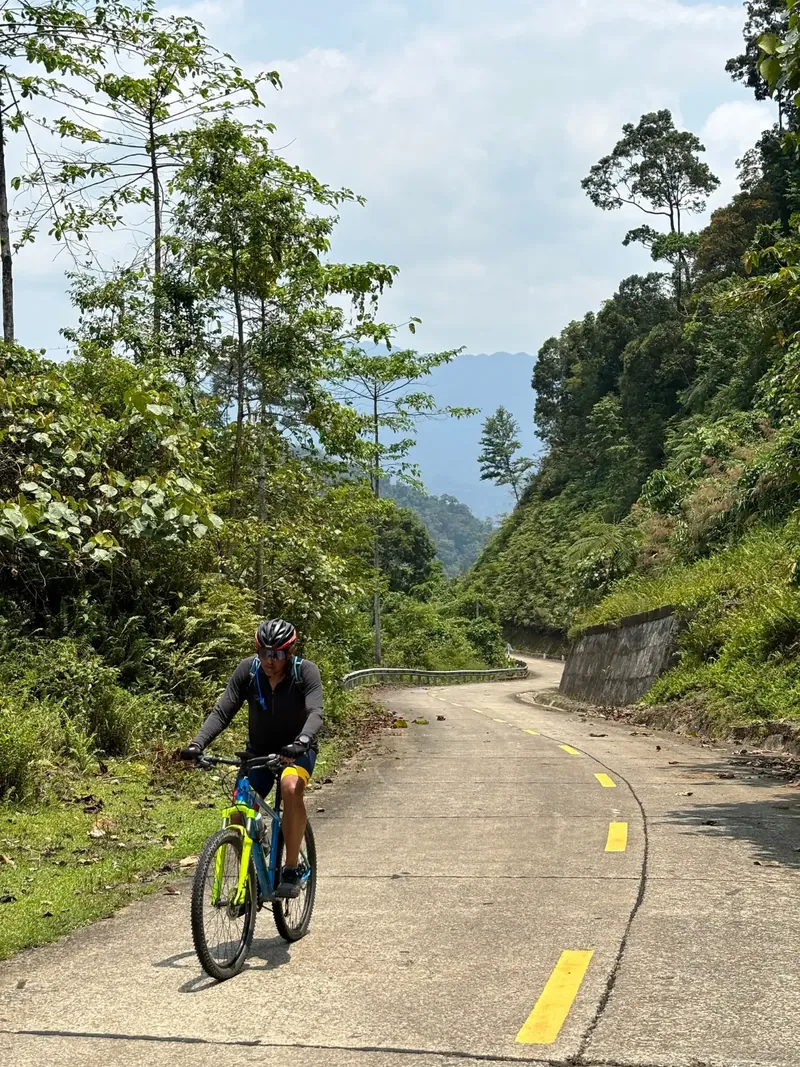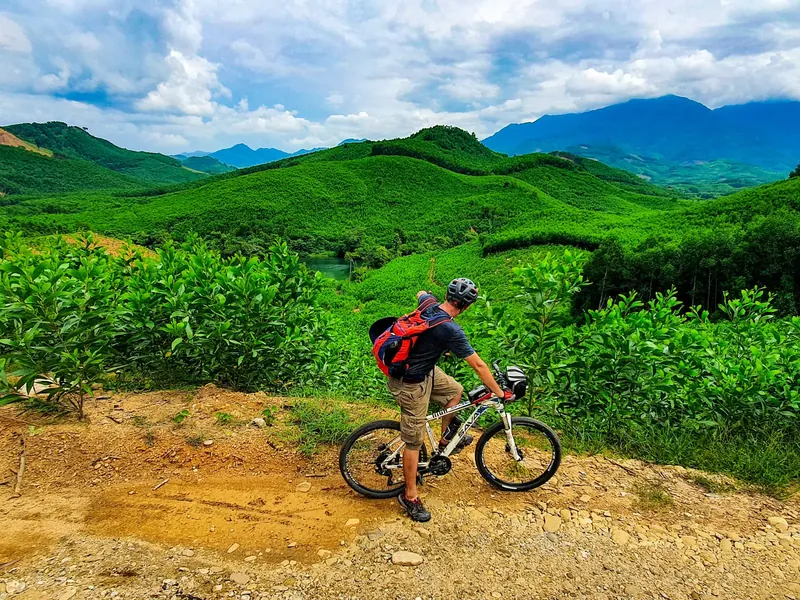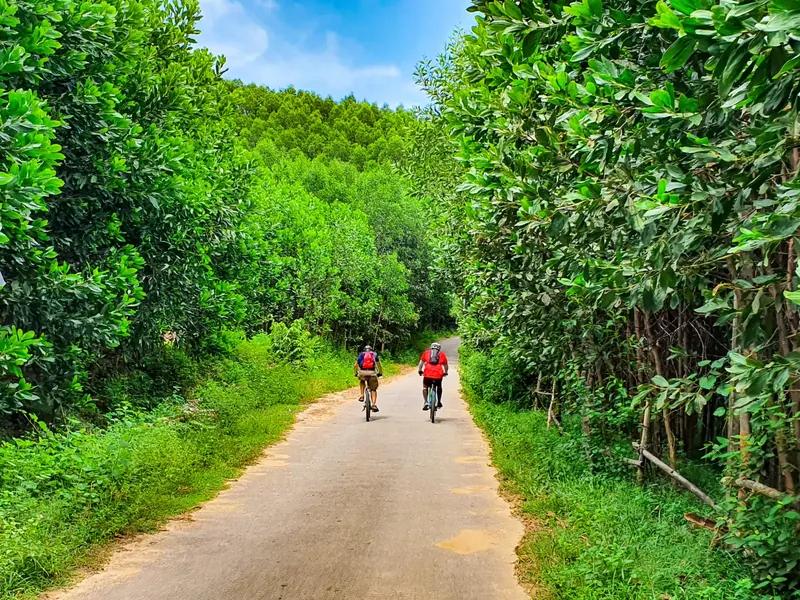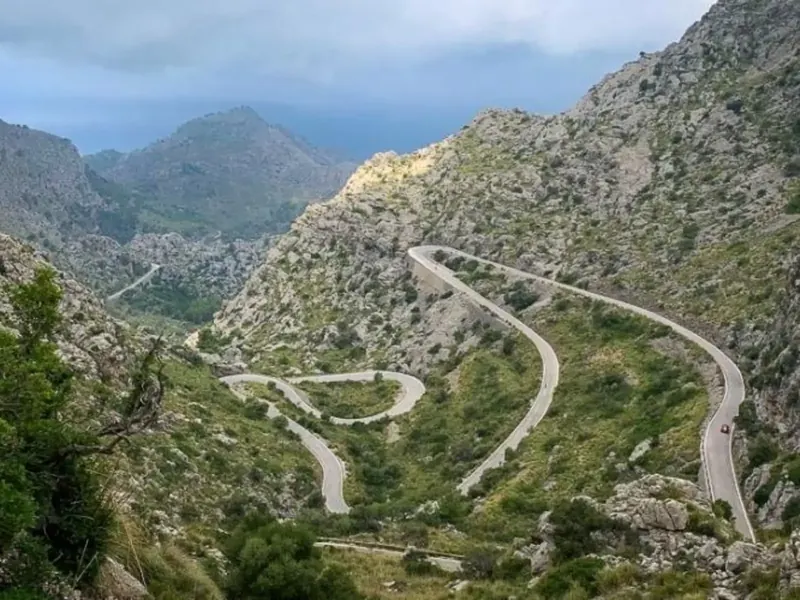
Search for the Ho Chi Minh Trail and you will mostly find photographs of a smooth two-lane highway curling through green mountains, usually with a motorbike on it.
The road everyone photographs is not the trail
That is the Ho Chi Minh Road: a modern highway network built to run the length of Vietnam from north to south. It is a fine road and a genuinely beautiful ride. It is also about fifty years younger than the thing it is named after.
The original Ho Chi Minh Trail was not a road at all. It was a shifting network of jungle tracks, footpaths, river crossings and supply routes threading through Vietnam, Laos and Cambodia during the war, built to be hard to see from the air, constantly rerouted, and never a single line on a map. Much of it has since been reclaimed by forest. Some sections were absorbed into the modern road. Others are simply gone.
Riding the Ho Chi Minh Trail today means riding a mixture: stretches of the modern road, and quieter fragments where the old routes ran. Knowing which is which is most of what separates a good week here from a scenic one.
Where the riding is
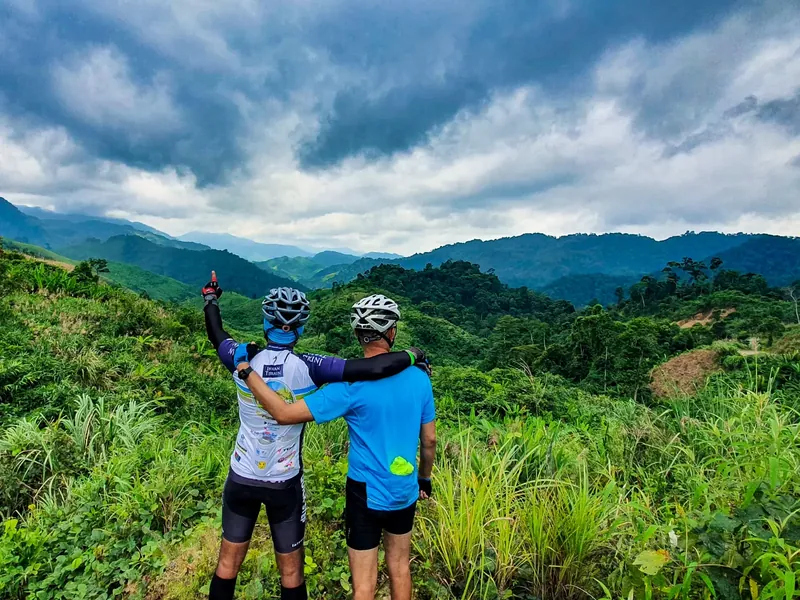
The section that matters for a cyclist is in Quang Nam province, in the Truong Son mountains, the range that forms the spine of central Vietnam and the border with Laos. On most maps in English it is called the Annamites.
This is not a corner of Vietnam that sees many visitors. The coast around Hoi An is busy, and Hue draws its own crowds, but the country between them, inland and upward, is quiet in a way that surprises people who thought they knew Vietnam.
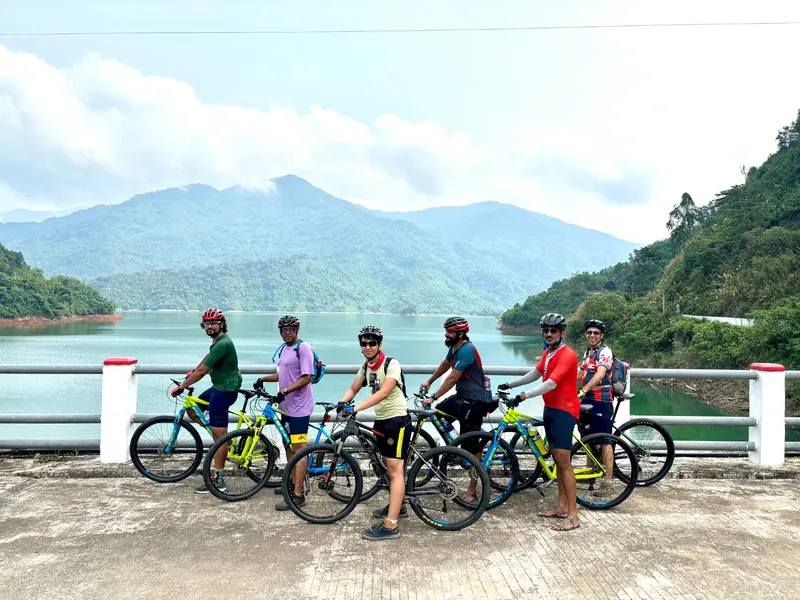
On our Vietnam Adventure the mountains arrive on Day 7, after five days of coast and river valley. The numbers give some idea of the change: Day 7 is 44 km with 1,208 m of climbing, Day 8 is 70 km with 1,421 m. Short days by distance, long days by everything else.
If those figures do not mean much on their own, the difficulty grades set out what a day of that size actually asks for, and how it compares with the rest of what we run.
What the riding is actually like
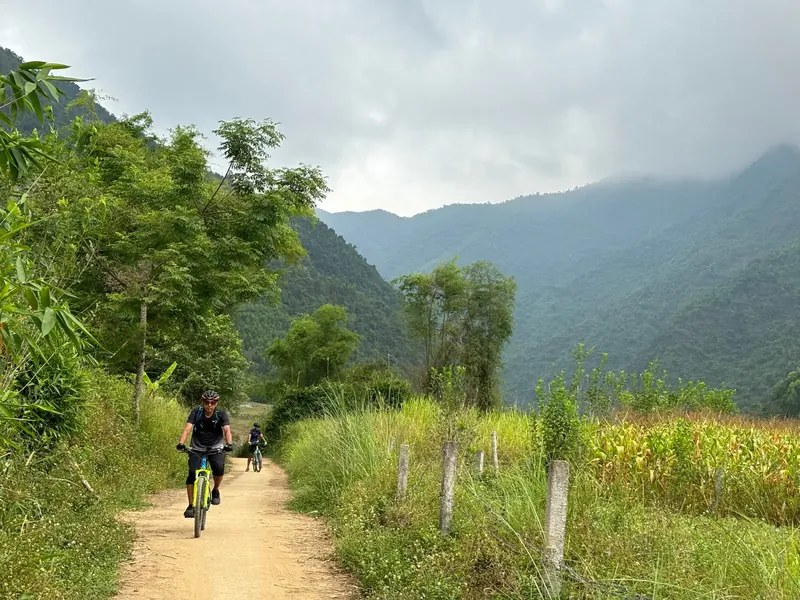
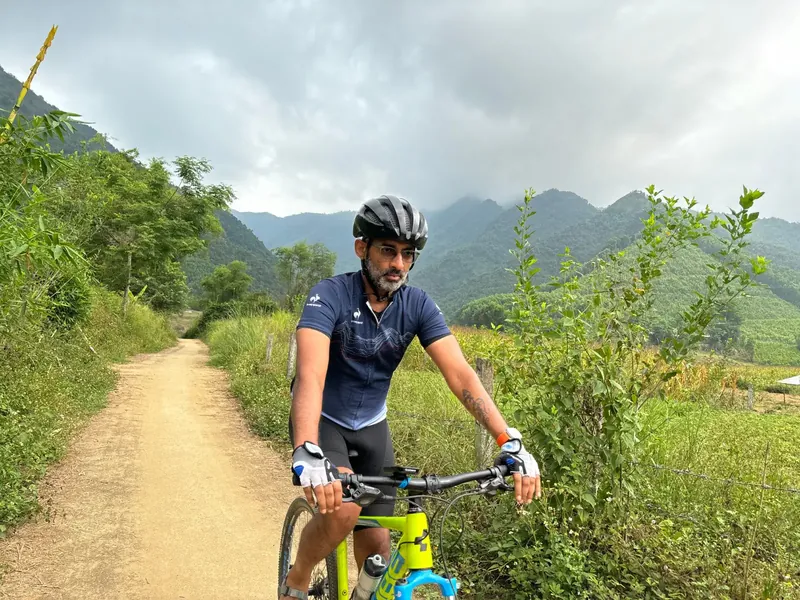
Day 7 starts on tarmac. About forty-five minutes in, the surface breaks up into a rough dirt trail, sometimes slushy depending on what the weather has been doing, and stays that way for twenty or thirty minutes before returning to concrete and tarmac for the rest of the day.
It is also the hardest day of the tour. Two long climbs, the second steeper than the first, with a descent between them. Not walls, but sustained drags that go on long enough to matter. If there is a day that decides whether you enjoyed the week, this is it.
Day 8 has no dirt at all, which surprises people who assume the remote day is the rough one.
It begins on a narrow concrete road, and that road is the old trail: a stretch of the original network, tarmacked over decades later, so you are riding the historic route on a surface it never had. It eventually meets the modern Ho Chi Minh Road, and from there it is roughly fifty kilometres of smooth tarmac to the night's stop. Two more long climbs, sustained rather than steep, and noticeably easier than the previous day.
Riding both the old trail and the road named after it, in that order, in a single day, is the neatest illustration of the distinction this article opened with.
Day 9 has no long climbs at all, but a string of short sharp kickers that keep the legs honest all the way to Hue.
The roads are empty
From the moment the ferry leaves Hoi An, the traffic effectively stops. Not light traffic: very few vehicles at all, for most of the route, for most of the week.
It stays that way until roughly the last twenty kilometres, approaching the tomb of Emperor Minh Mang, where the ordinary world resumes.
Food, water and the rhythm of the day
Nowhere on this route is genuinely without options. Small village cafés supply water, snacks and Vietnamese coffee, which has a way of becoming the structure of the day rather than an interruption to it. The support van carries food and water, so nobody is riding loaded.
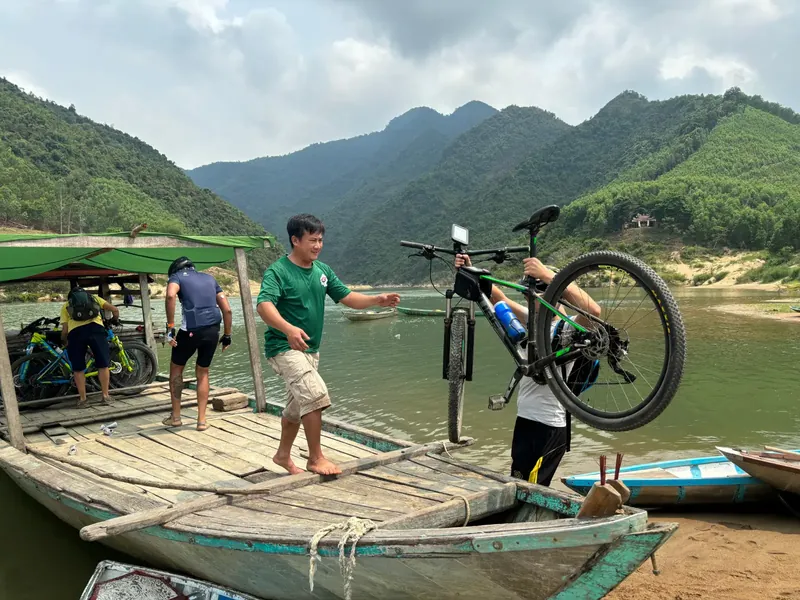
Stops fall roughly every hour to ninety minutes. Some are not optional: waiting for a ferry to arrive and cross is part of the route, and those pauses turn into coffee and conversation.
Where you sleep on Day 8
A large traditional wooden house on stilts, in a genuinely remote setting. The ground floor works as a casual café. Upstairs is the sleeping area, with mattresses laid out on the floor, dorm-style.
It is basic and worth being plain about. Three or four shared Western-style toilets, and enough charging sockets for the group. It is not a hotel and does not pretend to be one.
It is also one of the most atmospheric places on the tour, somewhere that is part of the place rather than built for people passing through it.
Permits, and the one thing you do need
Riders need no permits and no special documentation. The route runs within a few kilometres of the Laos border in places, but it never crosses a checkpoint or enters a restricted area.
There is one exception. The Day 7 hotel sits in an area inhabited by an ethnic minority community, where entry for outside guests is more tightly controlled, and the hotel needs passport details for everyone in the group in advance of arrival. We collect those and handle it, so there is nothing to arrange yourself beyond sending the details when we ask.
Pascal
Pascal, our guide and local host, has spent decades refining this route and the stops on it. He knows the roads, the villages and the language, with a French accent that has never once got in the way.
The people
Almost nobody you meet will speak English. It stops nothing. There is a great deal of curiosity and warmth on this route, and conversations happen anyway, assembled out of a few words, a lot of gesturing and a lot of laughing.
Riders talk about this more afterwards than they talk about the climbs.
The animal nobody has seen since 2013
Somewhere in the forest either side of this road lives, or lived, the saola.
It was first documented by science in 1992, when a joint survey by WWF and Vietnam's Ministry of Forestry found a skull with unusual horns in a hunter's house. It was the first large mammal new to science in more than fifty years. An antelope-like wild ox with long straight horns, it earned the nickname Asian unicorn less for the horns than for how rarely anyone has managed to see one.
The last confirmed sighting in the wild was a camera-trap photograph taken in September 2013, in Quang Nam province. That is the province this route rides through. In the thirteen years since, despite eDNA sampling of forest streams, sniffer dogs, structured interviews with local hunters and a concerted international search running through 2024 and 2025, there has been no confirmed sighting. None exist in captivity. The species is listed as critically endangered, and conservationists are honest that the absence of evidence is not evidence of absence: the terrain is dense enough, and the animal cryptic enough, that it could persist unseen.
The threat is not hunters after saola. It is snares, set in the forest for deer and civet, that catch whatever walks into them. That is why you will pass signs from the forest department asking people to protect what is left. They are on Day 8, along the Ho Chi Minh Road.
The signs are in Vietnamese only, with no English translation. If you want to know exactly what they say, you will have to do what we did: photograph one and let Google Translate work it out.
You will not see one. Nobody has for thirteen years. But there is something worth sitting with in riding through the last place on earth where a large mammal was photographed alive, past signs asking people to leave it alone.
What to ride it on
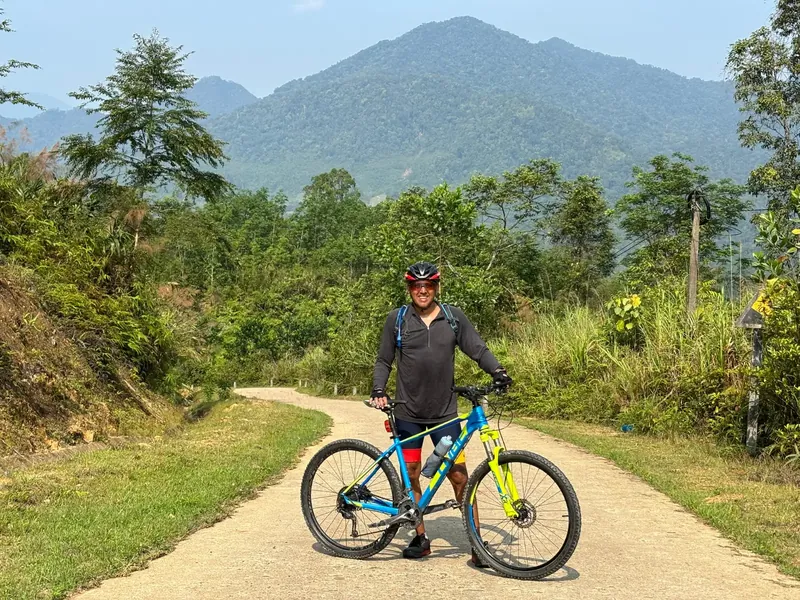
This is not a road bike route. The mix of tarmac, concrete and dirt asks for a hardtail mountain bike or a gravel bike with 40 mm tyres or wider. That surprises riders who associate Vietnam with flat coastal spinning, and it is worth taking seriously.
If you would rather not fly with a bike, hardtails with disc brakes are available through our local partner in Hoi An. Numbers are limited and they need reserving well ahead, which is worth doing early rather than on arrival.
The gearing on the rental bikes has always been more than enough for this route. Across several runs of the tour the only mechanical trouble has been the occasional puncture.
Riders coming from India ask the same two questions in the same order: what the bike costs to fly, and how many connections it has to survive. Both are covered on our page for riders flying out of India.
When to go
Late February and early March are the best of it. Daytime temperatures run 22 to 30 degrees on the coast, cooler in the mountains, and humidity is lower than the summer months. Mornings and evenings in the hills are noticeably cold by comparison with the coast, so a light rain jacket and a wind vest earn their place.
The honest version
Most cycling in central Vietnam is sold on Hoi An: a lantern-lit old town, a nine kilometre ride through rice paddies, a cooking class in the afternoon. It is lovely and there is nothing wrong with it.
This is a different thing. It is eight riding days from Hoi An to Hue, 438 km and 5,791 m, with the hardest riding in the last three days and several nights in simple accommodation a long way from anywhere.
It is also worth saying who it does not suit. This is not the tour for you if you like to stay inside your comfort zone on food and accommodation. The food is local, and there is not always a Western option waiting.
It is not for you either if you do not enjoy riding on rough concrete and dirt. They are a genuine part of this route. You do not need to be a hardened gravel rider, but you do need to be comfortable with some rough stuff.
Much of the experience is the ride itself, and parts of the route involve ferry crossings and private boat transfers that a support vehicle cannot follow, so this is not a tour we recommend bringing a non-riding companion on. The days are long, with time spent at waterfalls, over lunch and waiting for ferries, and there is little of the afternoon left for sightseeing afterwards.
If you are weighing this against our other Southeast Asia week, there is a piece on choosing between Vietnam and northern Thailand.
If that sounds like the week you want, the full day-by-day is on the Vietnam Adventure page, including what is included, what it costs and when the next departure runs.
Written by Barnowl Adventures.