Most riders in India's big cities rarely, if ever, ride in genuinely cold air. Early mornings in winter can be cool, but cool in Hyderabad or Chennai is not cold on a mountain. So it is easy to pack for "spring in Spain" or "winter in Thailand" in a jersey and shorts, and discover on the first long descent that you are shaking too hard to brake properly.
This is the most common kit mistake we see. It is entirely avoidable.
Two things make mountains cold
Height. Air cools as you climb, on average by around 6.5°C for every thousand metres. Mallorca's mountains are noticeably colder than its coast: riding operators on the island put the Serra de Tramuntana at five to eight degrees cooler than the shoreline.
The wind you make yourself. On a climb you are working hard and moving slowly. Then you crest the top, wet with sweat, and descend at 40, 50 or 60 km/h. The air that felt mild on the way up now strips heat from you far faster.
How cold it actually feels
We ran the standard wind chill calculation for typical descending speeds. It was designed for exposed skin rather than a cyclist in kit, so treat it as indicative, but the direction is not in doubt:
| Air temperature | 30 km/h | 40 km/h | 50 km/h | 60 km/h |
|---|---|---|---|---|
| 10°C | 6.6°C | 6.0°C | 5.5°C | 5.1°C |
| 8°C | 4.0°C | 3.3°C | 2.8°C | 2.3°C |
| 5°C | 0.1°C | −0.7°C | −1.3°C | −1.8°C |
| 3°C | −2.6°C | −3.4°C | −4.1°C | −4.6°C |
A 5°C morning, which sounds merely brisk, feels below freezing on a fast descent. Add damp clothing, and after a long climb your jersey will be damp, and it feels colder still.
Where it catches riders out on our tours
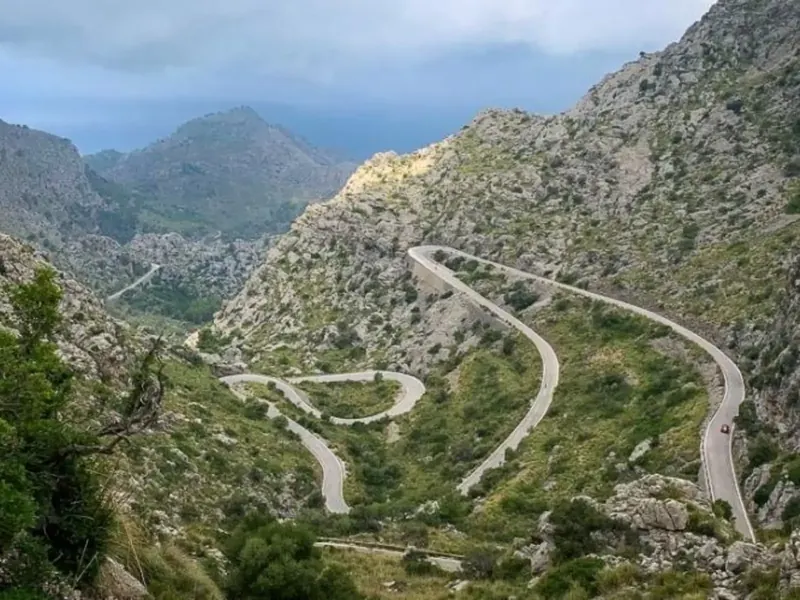
Mallorca in April. Nights on the island fall to around 10°C, and the Tramuntana is several degrees colder than the coast. An early start over the mountains on our Mallorca camp can mean descending in single figures. The famous descent to Sa Calobra comes straight after the cold of the high road.
Girona in spring and autumn, Tuscany in September. Lovely days, cool mornings, and descents that start in shade, on our Girona camp and our Tuscany tour alike.
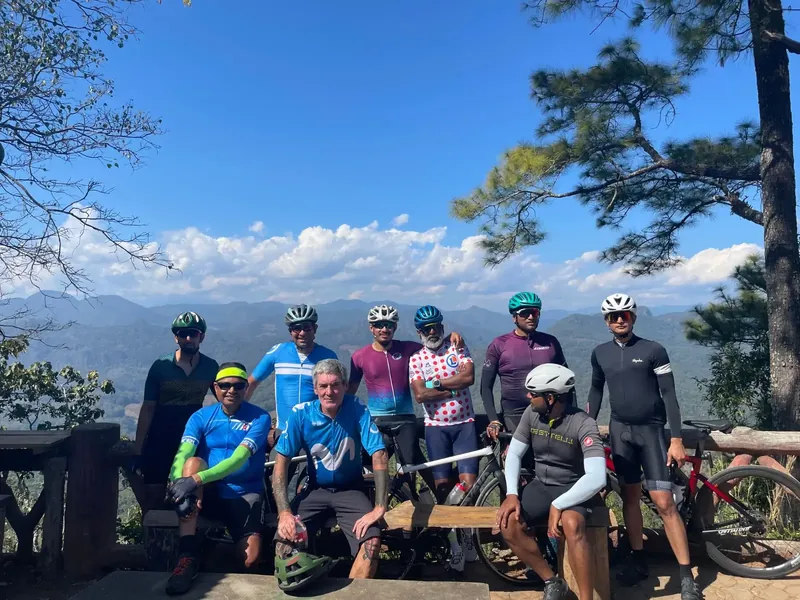
Northern Thailand in December and January. This surprises people most. Chiang Mai can be 16°C at dawn and 30°C by the afternoon. But Doi Inthanon, Thailand's highest mountain at 2,565 metres, regularly records around 3°C at the summit on cold mornings in the cool season, with frost on the grass. Our Mae Hong Son tour enters Doi Inthanon National Park on Day 3, with the summit as an option. The park does not allow cyclists to ride down the mountain, so the cold there meets you at the summit rather than at 50 km/h, but standing at 3°C in a wet jersey is cold enough on its own.
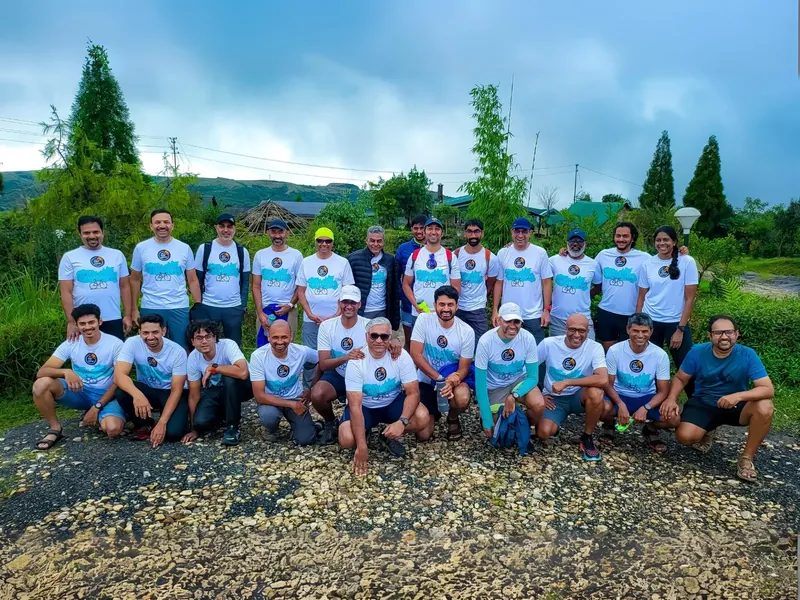
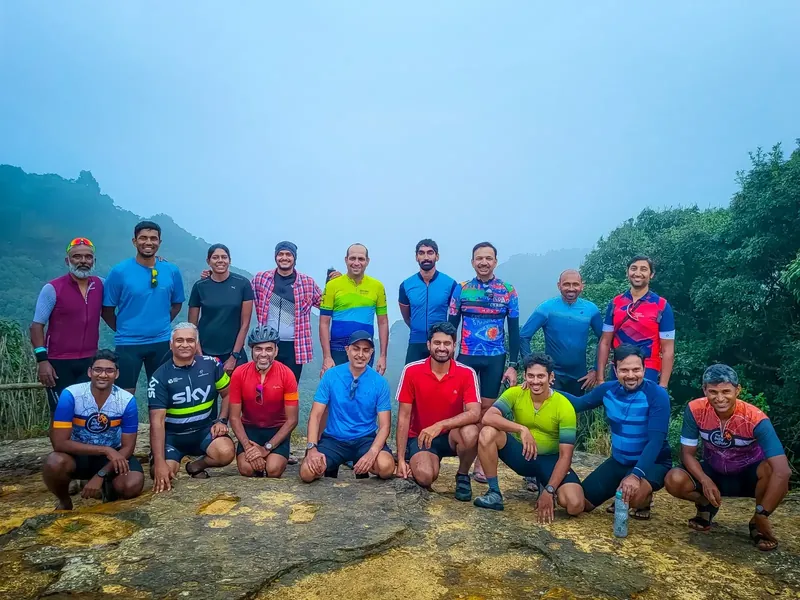
Meghalaya in September. Not cold by these standards, but wet. Our Meghalaya tour rides at the end of the monsoon, and long descents in rain chill riders quickly.
Why it matters more than comfort
Cold hands brake and shift badly. Shivering makes a bike harder to control. Cold riders lose concentration on exactly the part of the day where concentration matters most: a long, technical descent. Being cold on a descent is a safety problem first and a comfort problem second.
What to pack
You do not need winter kit. You need a few light layers that pack into a pocket or the support vehicle:
A windproof gilet. The single most useful item. It blocks the wind on your chest, where you lose most heat on a descent, and folds into a jersey pocket.
Arm warmers and knee or leg warmers. Easy to put on at the top, easy to remove at the bottom.
Long-finger gloves. Thin ones are enough. Cold fingers are the first thing to fail.
A packable rain jacket. For rain, and as an extra windproof layer on a cold morning.
A thin base layer. It keeps a damp jersey off your skin.
A cap or thin headband under your helmet.
Overshoes, if rain is likely.
How to use them
Put layers on at the top, not halfway down. Stop for a minute at the summit. Zip up, put on the gilet and gloves, then descend. Trying to do it on the move at speed is how things go wrong.
Eat at the top. A cold rider with an empty stomach gets cold faster.
Keep turning the pedals lightly on long descents where it is safe to do so. A little movement keeps you warmer.
On a supported tour, use the vehicle. Hand your layers to the support vehicle in the morning and collect them before the long descent. That is one of the things it is there for.
Start the next climb easy. Muscles that have cooled on a long descent need a few minutes before they will take full effort. Spin a lighter gear at a higher cadence for the first part of the climb.
The short version
If your tour has a mountain in it, pack a gilet, arm warmers and thin gloves, whatever the forecast says for the nearest town. You will probably use them every day.
For the rest of the kit list, see our guide to what to pack for a supported cycling tour.
Written by Barnowl Adventures.