A supported tour takes a lot off your plate. Your luggage moves between hotels, the van carries water and spares, and someone else has planned the route. That makes it tempting to pack lightly and casually. Most of the time that works. The few things people forget are the ones that matter on the road.
This is the list we would use ourselves. Adjust it for your tour and your bike.
Start with what the tour provides
Before you pack anything, read the inclusions for your tour. On our supported tours the vehicle carries water, electrolytes and fruit, and on most there is mechanical support. Route files are shared before the tour. There is no need to carry a week of electrolyte tablets or a full workshop. But every tour is different, so check: on our Chiang Mai camp, for example, there is no on-road mechanical help during rides.
If you are bringing your own bike
A spare rear derailleur hanger for your exact frame. The single most useful spare you can carry. Hangers are specific to the frame, bend easily in transit, and are often impossible to find locally.
Spare cleats and the bolts for them.
Tubes, tyre levers and, if you run tubeless, plugs and sealant.
A multi-tool with a chain breaker, and a quick link for your chain.
The tools to rebuild your bike: pedal spanner, the hex keys for your stem, bars and seatpost, and ideally a small torque key for carbon parts.
Chain lube.
Zip ties and a little electrical tape. They fix more things than they should.
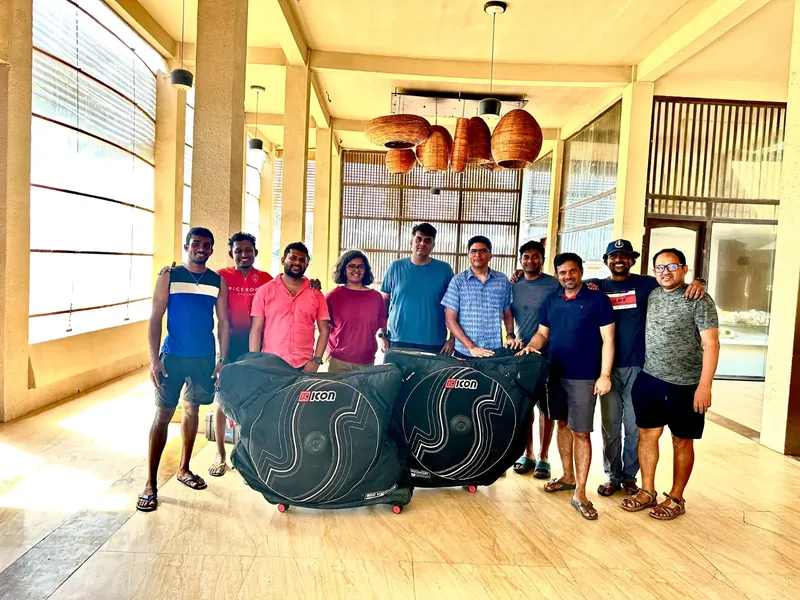
On CO2 cartridges: airline rules vary. Check yours, or buy them at the destination. Boxing the bike and what airlines charge for it are in our guide to flying with your bike from India.
If you are renting a bike, bring your own pedals, your saddle if you are particular about it, and a note of your saddle height and setback so the bike can be set up properly on the first morning.
Riding kit
Bib shorts and jerseys. Two or three sets is plenty if you can wash kit in the evening. Bring more if laundry is uncertain.
Cycling shoes, and your helmet.
Layers: a windproof gilet, arm warmers, knee or leg warmers, and thin long-finger gloves. Even on warm tours, mountain mornings and descents can be cold. We explain why in our post on cold descents.
A packable rain jacket.
Short-finger gloves, a cap, and sunglasses with clear or light lenses as well as dark.
Overshoes, if rain is likely.
Electronics
Your bike computer, with the tour's route files loaded before you leave home.
Chargers and cables for everything: computer, lights, electronic groupset, phone.
A power bank. Long days use battery.
Front and rear lights. A rear light makes you more visible in traffic, in tunnels and in poor light.
A universal travel adapter. Sockets differ across our destinations, and one adapter is simpler than several.
Nutrition
Your own gels and bars, the ones your stomach already tolerates at effort. Familiar products can be hard to find abroad, and a new gel is not something to test on Day 3. How much to eat, and when, is in our post on fuelling back-to-back days.
Two bottles.
Electrolytes, if you have a preference. The van on most of our tours carries them, so you do not need a week's supply.
Health and personal
Sunscreen, rated high and sweat-resistant, and lip balm with sun protection.
Chamois cream. Consecutive days are where saddle sores start.
Your personal medication, with prescriptions, in your hand luggage.
A small first-aid kit: plasters, antiseptic, painkillers you already use.
Insect repellent for tours in Asia.
Documents and money
Passport, with plenty of validity beyond your travel dates, and your visa if needed.
Travel insurance details, and confirmation that the policy covers cycling.
Your tour booking confirmation and emergency contacts.
Copies of everything, digitally and on paper.
A card that works abroad, and some local cash for café stops and meals that are not included.
Off the bike
Casual clothes and comfortable shoes for evenings.
Swimwear, on tours with a coast, a pool or hot springs.
Tour-specific notes
Meghalaya: some roads are rough, and we recommend tyres wider than 35 mm on the Meghalaya tour. Pack for rain.
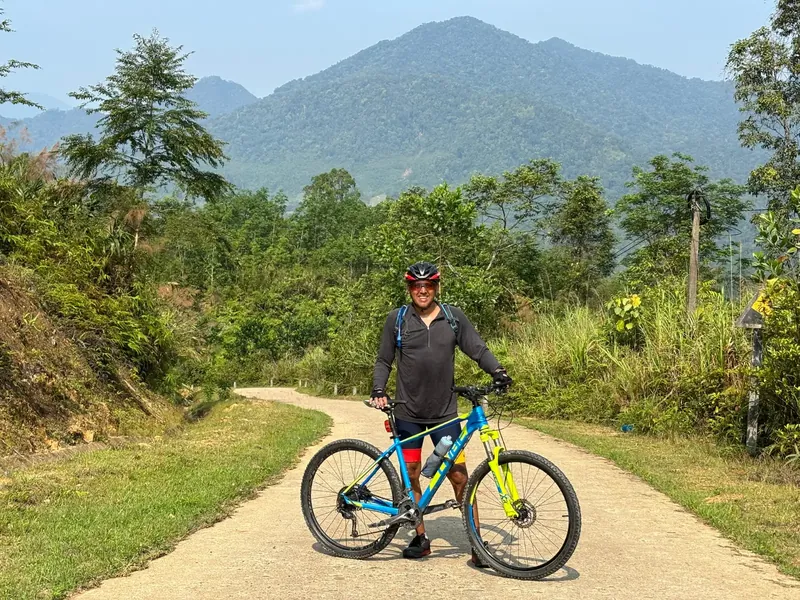
Vietnam: a hardtail mountain bike or a gravel bike on tyres 40 mm or wider. Bring your own, or rent a hardtail in Hoi An and bring your pedals and saddle. Be ready for dirt and rough concrete.
Mae Hong Son: the route enters Doi Inthanon National Park in the cool season, with an optional summit. Pack proper warm layers.
Europe in spring and autumn: layers above everything.
What you can leave at home
A full toolbox, a track pump, a week of electrolytes, and paper maps. If you are on a supported tour, those are the operator's job.
Written by Barnowl Adventures.